
Anyone who has opened a bag of good vanilla knows the smell arrives before you see the beans. What surprises most buyers is that a freshly picked vanilla pod smells of almost nothing. The rich, sweet aroma is created after harvest, during the vanilla bean curing process, a slow sequence of heating, sweating, drying and resting that can take several months. Curing is where a green pod turns into the dark, oily, flexible bean that chefs, extract makers and food manufacturers pay for, and it is also where most quality problems begin.
This guide walks through the four classic stages of curing, what happens chemically at each step, how long the work usually takes and what a buyer can check to tell well cured beans from rushed ones. The figures quoted come from published research and extension guides, and they are typical ranges rather than fixed rules, because every curing house adapts the method to its own beans, climate and experience.
If you are new to the crop itself, it helps to know that vanilla is the fruit of a climbing orchid. Our earlier guide on how vanilla beans come from orchids explains the plant, and the article on how to grow vanilla beans covers the farming side that comes before harvest.
Why Vanilla Beans Need Curing at All
A mature green vanilla pod stores its future flavour in a locked form. The main precursor is glucovanillin, a molecule in which vanillin is bound to a sugar. As long as the pod is intact and alive, the enzymes that could release the vanillin are kept apart from it, so the pod stays green and mostly odourless. Researchers at CIRAD describe the purpose of curing as bringing those flavour precursors into contact with the enzymes that break them down, so that free vanillin and hundreds of other aroma compounds can form.
The theoretical ceiling is higher than most people expect. A patent review of vanilla processing notes that perfectly mature beans contain roughly 10 percent glucovanillin by dry weight, which could in theory yield a little under 5 percent vanillin if every molecule were converted with no losses. Real curing never reaches that ceiling. Enzymes are partly destroyed by heat, some vanillin is lost to oxidation, and immature beans start with much less precursor in the first place. That is why two lots from the same district can test very differently in the lab.
Curing also has a practical job beyond flavour. Fresh pods are around 80 percent water, according to a curing review published in Perfumer & Flavorist, and in that state they rot quickly. By the end of curing the bean holds roughly 20 to 30 percent moisture, which is dry enough to resist mould for months yet moist enough to stay supple. Getting that balance right is as important to a buyer as the vanillin figure itself.
The Four Stages of the Vanilla Bean Curing Process
Every producing country has developed its own variation, but the traditional Bourbon method used in Madagascar and much of the Indian Ocean region is the reference point for most of the trade. Its four stages are killing, sweating, drying and conditioning. Some guides list five or six steps because they treat sorting, washing or storage separately, yet the core logic stays the same.
Stage 1: Killing
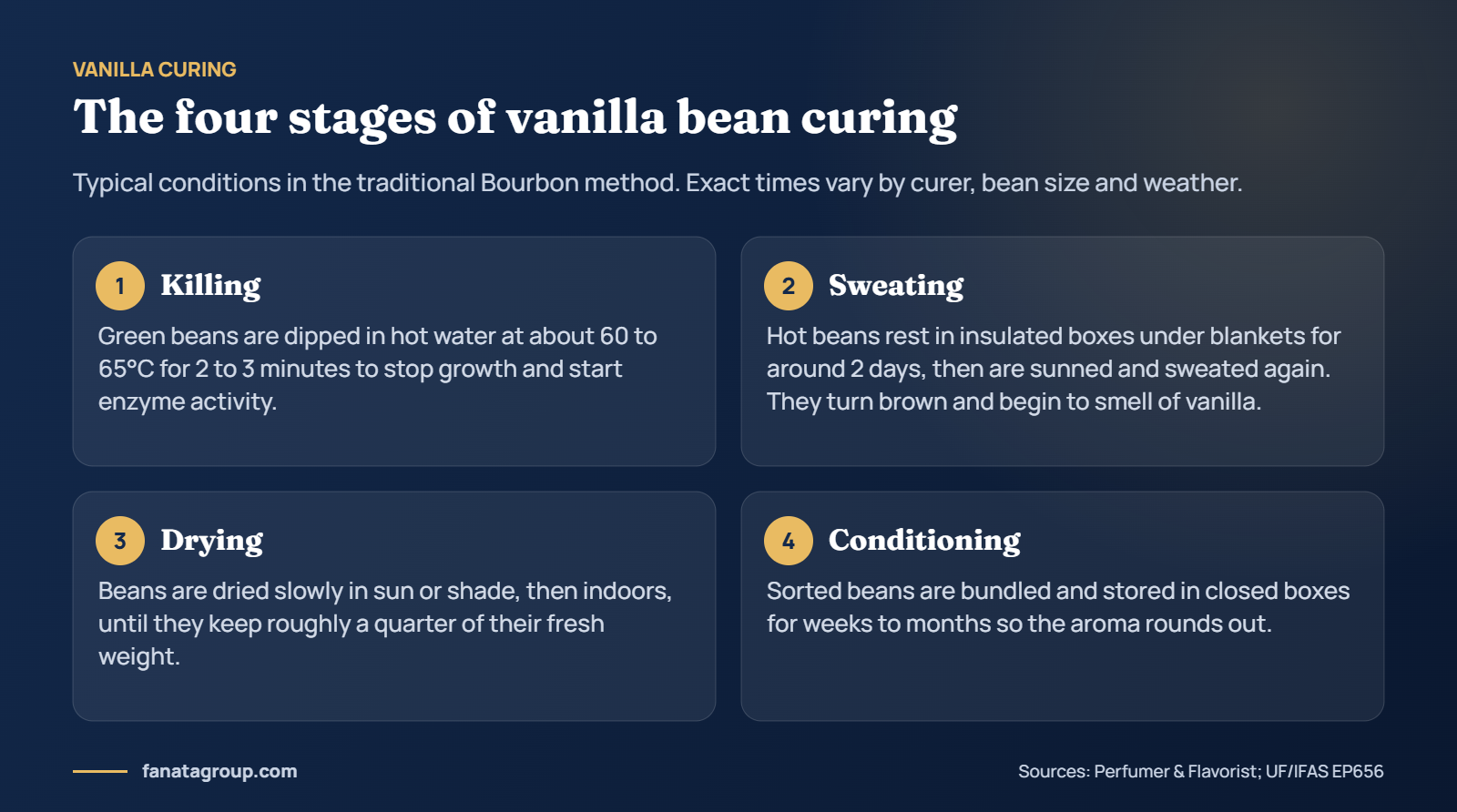
Killing stops the pod from living on as a plant tissue. In the Bourbon method the green beans, usually sorted by size first, are dipped in hot water at about 60 to 65°C for two to three minutes. The University of Florida’s extension guide on vanilla extract production gives a similar instruction, scalding in water above 63°C, and notes that the step also helps prevent splitting and partly disinfects the fruit. The heat breaks down cell walls so that enzymes and glucovanillin finally meet.
Temperature control matters more than it looks. Research summarised in Perfumer & Flavorist found that a three minute dip at 60°C already removed about half of the bean’s natural glucosidase activity, and at 70°C the predicted loss climbed above 80 percent. Water that is too hot can cook away the very enzymes the curer is trying to release, while water that is too cool leaves pods alive and prone to splitting. Experienced curers judge this by feel and thermometer together.
Hot water is not the only option. Producers in different regions have killed beans with sun exposure, ovens or freezing, and laboratory studies show that any method which disorganises the tissue can start the reaction. Each route produces a slightly different aroma profile, which is one reason vanilla from different origins tastes distinct even when the species is the same.
Stage 2: Sweating
Straight after killing, the hot beans are packed into insulated wooden boxes and covered with blankets so they keep their heat and moisture. This is the sweating stage, sometimes called fermentation, although the changes are mainly enzymatic rather than microbial. The first sweat typically lasts around two days. Studies cited by the International Society for Horticultural Science describe sweating temperatures of roughly 45 to 65°C at high humidity.
During sweating the beans change colour from green to chocolate brown and start to release the first vanilla notes. In many traditional operations the beans are then laid in the sun for a few hours each day and wrapped again at night, alternating between warmth and rest for one to two weeks. This repeated heating keeps the enzymes working while the beans slowly lose water. Rushing it, for example by sweating at very high temperatures to save time, tends to produce flat or smoky flavours.
Sweating is also the stage where hygiene matters most. The beans are warm, wet and tightly packed, which is ideal for mould if the boxes, blankets or hands handling them are not clean. Good curing houses inspect the lot daily and pull out any bean that shows white growth before it spreads.
Stage 3: Drying
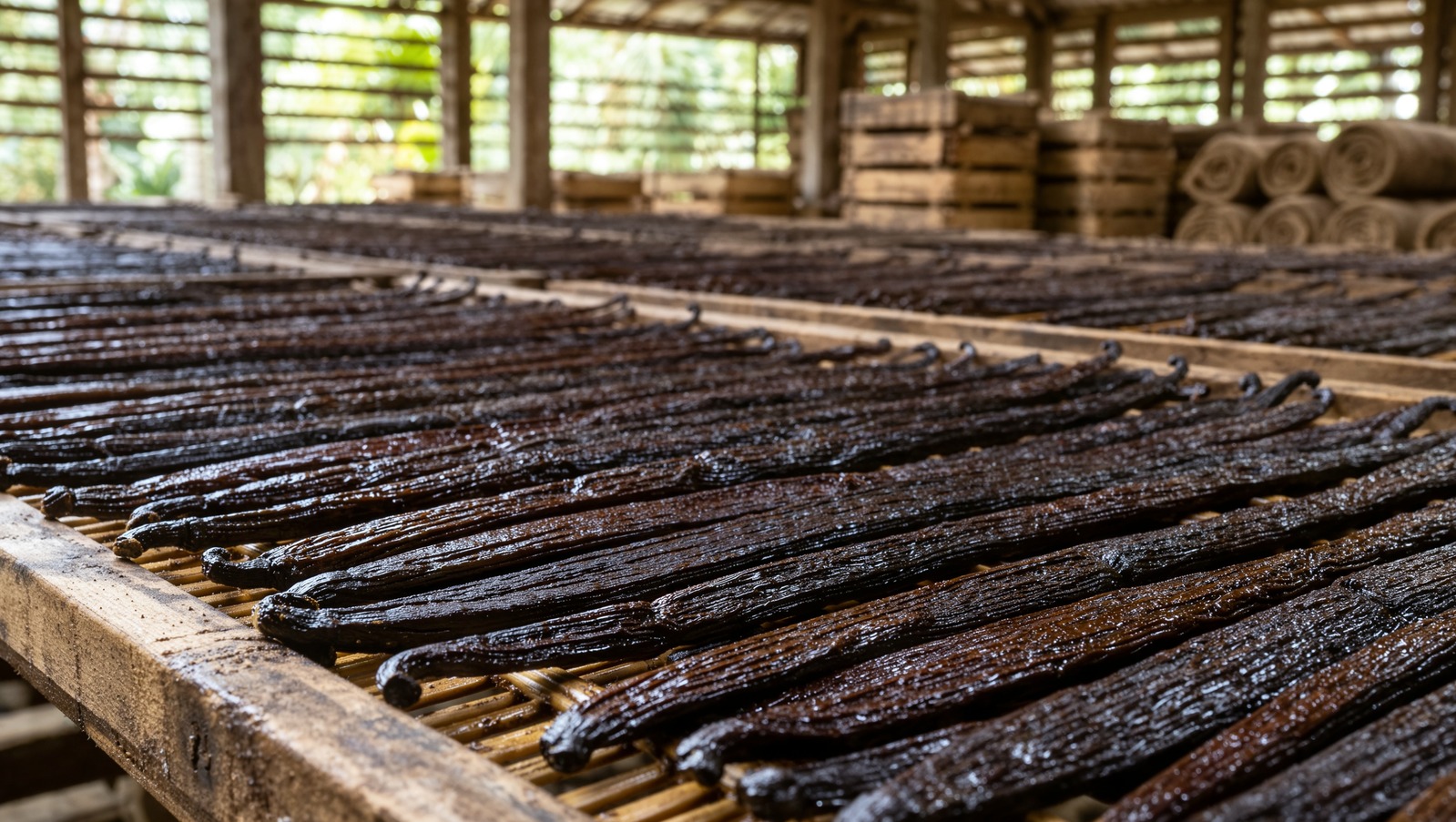
Once the colour has developed, the aim shifts to removing water without stopping flavour development too early. Beans are spread on racks in sun or shade and later moved indoors to dry slowly. The University of Florida guide describes drying at about 32°C for two weeks to a month, depending on bean size and starting moisture, until the beans weigh roughly a quarter of their original fresh weight while staying flexible.
Slow drying is a deliberate trade-off. Faster hot-air drying can finish in days and has been tested in research settings, and some studies found good results with controlled dryers. In traditional practice, however, gentle drying allows enzymatic and non-enzymatic reactions to keep building the aroma. Beans that are dried too hard become brittle, lose their oily surface and can crack, which pushes them into a lower grade.
Stage 4: Conditioning
Conditioning is the long rest. Dried beans are sorted by length and appearance, tied into bundles and stored in closed boxes lined with waxed or parchment paper. Over weeks or months the aroma rounds out as compounds continue to react and the moisture evens out between beans. Curers open the boxes regularly to check smell, feel and any sign of mould.
A Réunion study on traditional curing measured dry matter climbing from about 18 percent in fresh beans to around 57 percent after conditioning, which gives a sense of how much water leaves the bean across the whole process. Perfumer & Flavorist puts the full traditional cure at roughly 150 days. That long timeline is the main reason good vanilla is expensive, and it is also why lots that appear on the market only a few weeks after harvest deserve a closer look.
Curing Stages at a Glance
The table below summarises the typical conditions reported in the sources used for this article. Treat the numbers as reference ranges, since each curing house tunes them to its own conditions.
| Stage | Typical conditions | Typical duration | Main purpose |
|---|---|---|---|
| Killing | Hot water about 60 to 65°C | 2 to 3 minutes | Stop the pod living and release enzymes |
| Sweating | Warm, humid boxes, about 45 to 65°C | About 2 days, then repeated sun and sweat cycles | Turn beans brown and form vanillin |
| Drying | Sun or shade, then indoor racks around 32°C | About 2 to 4 weeks | Reduce water to about a quarter of fresh weight |
| Conditioning | Closed, lined boxes at room temperature | Several weeks to months | Round out aroma and even out moisture |
How Curing Affects Vanilla Grades and Price
Grading follows directly from curing. The plump, glossy, very flexible beans sold as gourmet or Grade A vanilla beans are the result of mature pods that went through a patient cure and kept a higher moisture level. Drier, thinner or split beans, often sold as extract grade or Grade B, can still carry plenty of flavour, which is why extract makers buy them, but they look less attractive and handle differently in a kitchen. Our guide to vanilla beans for making extract explains why the lower grade often makes more sense for that use.
Moisture also affects price in a less obvious way. Vanilla is sold by weight, so a lot with extra water weighs more and earns the seller more per kilogram. Beans that are too moist, however, are more likely to grow mould in transit. The University of Florida guide uses weight loss to illustrate the point: a pod that loses 75 percent of its fresh weight during curing ends up at about 25 percent moisture. Reputable suppliers state a moisture range on the specification sheet and can explain how they measured it.
Origin and method shape the aroma profile too. Beans cured with the Bourbon method from Madagascar have a reputation for creamy, sweet notes, while Indonesian and Papua New Guinea vanilla often show smokier or more fruity tones depending on how they were killed and dried. Species matters as well. If you are comparing species, see our article on Planifolia vanilla beans, and for regional detail read about Papua New Guinea vanilla beans.
Common Curing Shortcuts and How to Spot Them
High prices in some years encourage shortcuts. The most damaging one happens before curing even starts: picking pods before they are fully mature. The University of Florida guide notes that underripe capsules contain much less glucovanillin, so no amount of careful curing can produce the same vanillin level as a mature bean. Early picking is sometimes driven by theft risk in the field or by a rush to sell into a rising market.
Other shortcuts happen during processing. Sweating at excessive temperatures to speed things up, drying in hot ovens, or skipping most of the conditioning period can all turn out a bean that looks dark but smells weak or harsh. Some lots are also sold with high moisture to raise the weight. None of these problems are visible in a single photo, which is why samples and clear specifications matter when you buy in volume.
When you receive samples, a short hands-on check tells you a lot about how the beans were cured:
- Smell the bundle before opening it fully. Well cured beans give a deep, sweet vanilla aroma, not a sour, smoky or musty note.
- Bend a bean around your finger. Gourmet grade should flex without cracking, while extract grade can be stiffer but should not shatter.
- Look along the length for white crystals or fuzz. Fine, glittering frost can be natural vanillin crystals, but cottony or patchy white growth suggests mould.
- Check the colour. Even, dark brown to near black with an oily sheen suggests a patient cure, while reddish patches or green tips point to immature or rushed beans.
- Compare length and weight against the specification. If the moisture figure seems high for the grade, ask how it was measured.
- Ask the supplier how long the lot was conditioned. A curer who knows the answer usually knows the rest of the process well.
Storing Cured Vanilla Beans Without Losing Quality
Curing does not completely stop when the beans leave the curing house. Aroma continues to develop and moisture keeps moving, so storage needs care. Beans should be kept airtight, away from light and at stable room temperature. Refrigeration is generally discouraged because condensation can encourage mould and the cold can dry the surface unevenly. Vacuum packing is common for export lots because it limits both drying and oxidation during long sea or air freight.
For kitchen and small business use, glass jars or sealed bags work well, as long as the beans are checked from time to time and aired briefly if they feel damp. Our guide on vanilla bean shelf life and storing tips goes into more detail on how long beans keep and how to revive beans that have dried out.
What Buyers Should Ask a Vanilla Supplier About Curing
The best protection for a buyer is a supplier who is open about the process. Before ordering a larger quantity, it is reasonable to ask which curing method was used, when the beans were harvested, how long the lot was conditioned, what moisture range the supplier guarantees and how vanillin content was tested, if it was tested at all. Ask for photos of the actual lot rather than catalogue images, and request a sample from the same batch that will ship.
It also helps to understand the seasonal calendar. In many origins, harvest and early curing happen in a limited window, so beans offered at the start of the season are sometimes the least conditioned. Waiting a little longer, or asking the supplier to hold the lot until conditioning is complete, can be worth the delay. For a wider view of the market, see our pieces on Bourbon vanilla beans and on buying wholesale Indonesian vanilla beans.
Finally, keep records. Note the moisture, length and aroma of each lot when it arrives, and compare them after a few weeks in storage. Over time those notes show which suppliers cure consistently, which is worth more than any single lab result.
Frequently Asked Questions
How long does it take to cure vanilla beans?
A full traditional cure usually takes several months. Killing lasts only minutes and sweating a few days, but drying runs for two to four weeks and conditioning for weeks to months. Perfumer & Flavorist estimates the complete traditional process at about 150 days, although some producers shorten it with controlled dryers and others extend conditioning for premium lots.
Why are fresh vanilla pods green and odourless?
Fresh pods store their flavour as glucovanillin, a form of vanillin bound to sugar, which has little smell. The enzymes that release free vanillin are kept separate from it while the pod is alive. Curing breaks down the pod’s tissue so the enzymes can reach the glucovanillin, which is when the familiar vanilla aroma appears and the bean turns brown.
What moisture content should cured vanilla beans have?
Cured beans usually hold roughly 20 to 30 percent moisture, with gourmet grades at the higher end so they stay flexible and extract grades often drier. The right figure depends on the grade and use. Very high moisture adds weight but raises the risk of mould during shipping, so buyers should ask for the moisture range on the specification sheet and check samples on arrival.
Are white crystals on vanilla beans mould?
Not always. Fine, glittering crystals along the bean, often called frost or givre, can be natural vanillin that has crystallised on the surface of well cured beans. Mould looks different: it is usually fuzzy, cottony or patchy, may appear grey or green, and often comes with a musty smell. When in doubt, isolate the affected beans and ask the supplier for a replacement or lab check.
Does the curing method change the flavour of vanilla?
Yes. The way beans are killed, how hot and long they sweat and how slowly they dry all shape the final aroma. The Bourbon method is associated with creamy, sweet profiles, while other methods and climates can produce smokier, woodier or fruitier notes. Species and bean maturity add further differences, which is why vanilla from different origins rarely tastes the same.
Conclusion
The vanilla bean curing process is what turns a plain green pod into one of the most valuable spices in the world. Killing starts the reaction, sweating builds colour and vanillin, drying brings moisture down to a safe level and conditioning gives the aroma its depth. Each stage takes skill and time, and shortcuts at any point show up later as weak flavour, brittle beans or mould. For buyers, the practical takeaway is simple: ask how the beans were cured, check samples by smell, flexibility and appearance, and agree a moisture range before you order in volume. To keep learning about grades, origins and buying vanilla, browse more guides on the Fanata Group topics page.
Reviewed by Fanata Group Editorial Team. Last updated November 27, 2026.